Amicus Brief
LDAD Files Supreme Court Amicus Brief Challenging DHS Use of Social Security Information to Create Nationwide Voter Database
June 28, 2021
Sep 15, 2026
Editorial credit: Shuterstock
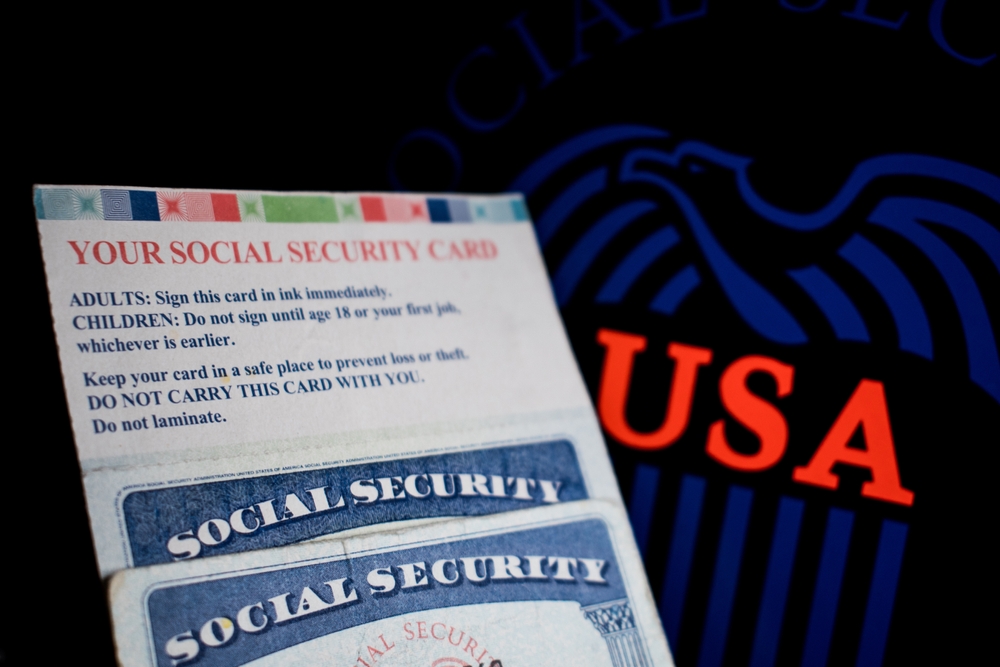
In a critical case involving the Department of Homeland Security’s efforts to use private Social Security information to create a new national voter database, Lawyers Defending American Democracy (LDAD) has filed an amicus curiae brief with the U.S. Supreme Court in Department of Homeland Security v. League of Women Voters.
The brief urges the Court to deny the government's request to stay a District Court ruling that blocked the Department of Homeland Security's (DHS) from using Social Security numbers (SSN) and related records from the Social Security Administration (SSA) to compile a nationwide voter database. The administration filed its stay application before the Supreme Court after the U.S. Court of Appeals for the D.C. Circuit declined to stay the District Court's ruling pending appeal.
This is the second time that LDAD has filed a brief in this matter, having previously filed an amicus in the District Court in support of the League of Women Voters’ (LWV) opposition to the actions of the DHS. At the request of counsel for the LWV, LDAD's Supreme Court brief focuses on the legislative history of restrictions governing the use of Social Security information, demonstrating Congress's longstanding concern about the creation of any national database using Social Security records.
LDAD’s brief makes clear that SSNs and related records have been regarded as uniquely sensitive information subject to strict limits on disclosure since enactment of the Social Security Act. It also underscores that DHS has no statutory authority to obtain and use SSNs and related records for the program that the District Court ruled unlawful.
The brief also describes why Social Security information held by the SSA is an inaccurate and unreliable indication of citizenship, since it reflects citizenship only at the time a Social Security number is issued, and the Social Security Administration does not update this information when someone later becomes a citizen. As a result, the proposed database could inaccurately identify voters resulting in a subsequent challenge to their eligibility. Finally, the brief warns that creating a centralized national database containing sensitive personal information would create cybersecurity and identity theft risks.
LDAD volunteer lawyers Ben Vaughan, Carla Giammechele, and Katie Zoglin, together with Georgetown Law students Nick Barrow and Gladwin An, worked on the brief. Ben Vaughan and LDAD Board Member Professor Mitt Regan of Georgetown University Law Center coordinated the effort. The brief was filed at the Supreme Court on behalf of LDAD by Gary DiBianco, Litigation Director at Lawyers 4 Good Government.
LDAD Board member and Georgetown Law Center Professor Mitt Regan coordinated the preparation of the brief. Mitt Regan stated that the case raises important concerns about the creation of a national database using highly sensitive personal information: "The DHS program seeks to use uniquely sensitive personal information to create a nationwide database of citizens and noncitizens, despite Congress's longstanding restrictions on the disclosure of Social Security records. Such a database creates a serious risk that it could be used for partisan or personal purposes, as history has shown. As we stated in the brief, the use of Social Security numbers and related records to compile a national database is deeply problematic; doing so to comprise an inaccurate database that purports to establish voter eligibility poses an especially grave risk to the rule of law and the electoral system in our constitutional democracy.”

Stay Informed —
featured press



All Rights Reserved. © 2026
General Inquiries • Press Inquiries • Follow on: LinkedIn • Instagram • Bluesky • Facebook